 DREAMWORKSDENTAL LABORATORIES Send a Case
 Single crowns and multi-unit bridges in zirconia, lithium disilicate, and porcelain fused to metal. Every case is designed against the opposing arch, and nothing leaves the bench until a technician has checked margins, contacts, and occlusion on the model.
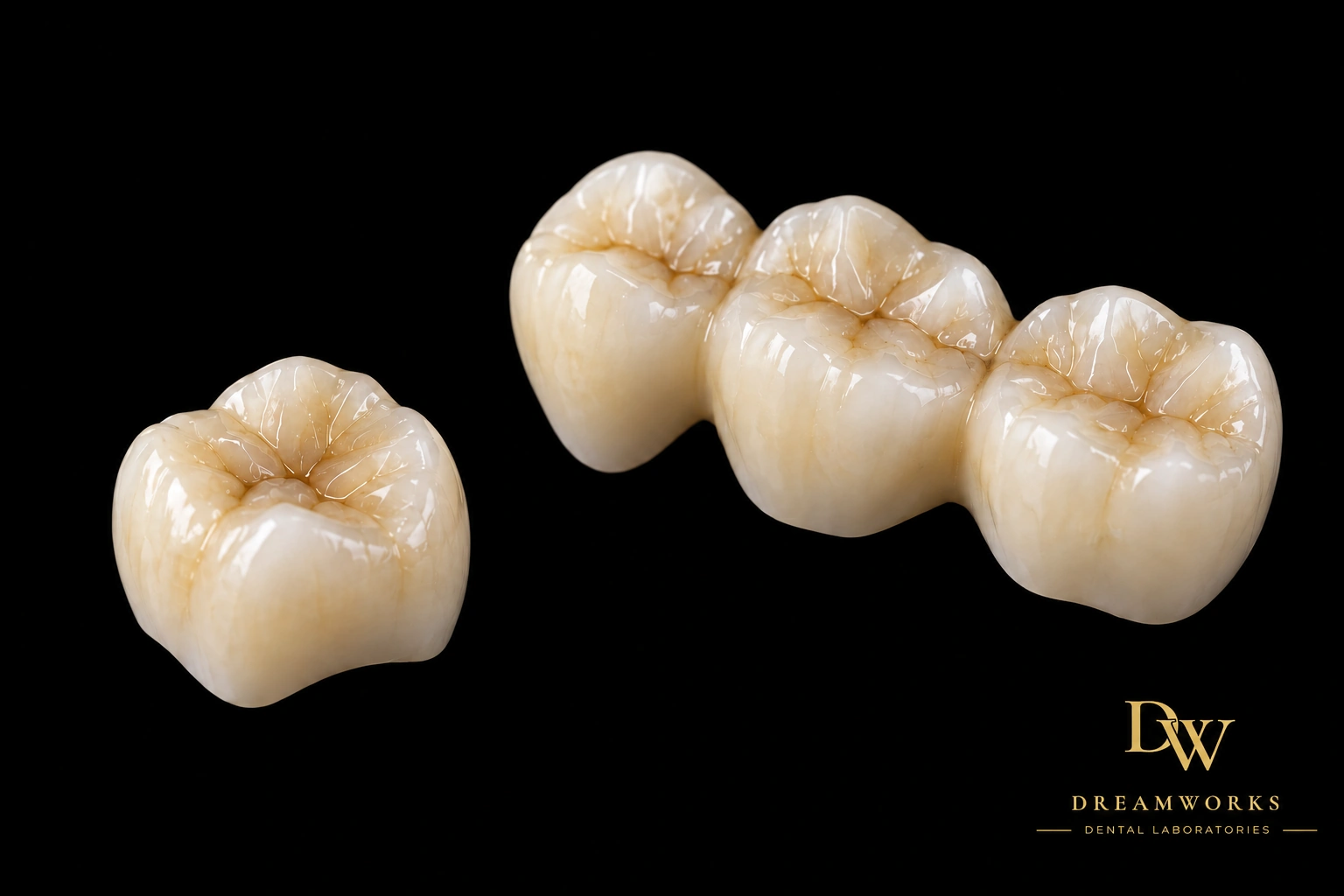
Most of the fixed cases we see are single crowns, with a steady share of three- and four-unit bridges. We make them in full-contour zirconia, layered zirconia, IPS e.max, and PFM, so you can prescribe by tooth and by patient. A posterior bridge and an anterior single unit can ship in the same box, shade-matched to each other.
Full-contour zirconia is our default for molars, bruxers, and longer spans, where strength and conservative reduction matter most. In the smile zone, layered zirconia or e.max usually gives the better result. PFM still makes sense when you want a metal substructure or are matching existing metal-ceramic work. Not sure which fits? See how we match material to the case, or leave it to us and we will call before we pick.
Ship a physical impression or upload intraoral scans through our secure portal.
We check margins, reduction, bridge path of insertion, and the bite before design.
Designed in CAD against the opposing arch, then milled or pressed, finished, and stained.
Shipped with QC and seating notes, timed to your seat date.
On a bridge, the abutments need a shared path of insertion and the connectors need enough height and width to carry the load. We check both in the scan before design starts. If an undercut or a short connector would weaken the bridge, we send a screenshot and a note so you can adjust the prep or approve a design change. The clinical call stays with the prescribing dentist.
A three-unit bridge should read as three teeth, not one block. We vary translucency and stain from abutment to pontic, and on anterior bridges we shape the pontic so it sits naturally against the ridge. Send the stump shade along with photos, shade tab in frame and flash off. It does more for the final result than anything else you can include.
Every crown and bridge is seated on the model and checked for marginal fit, proximal contacts, and occlusion before it is packed. Each case ships with cementation notes for the material used, referencing the manufacturer's instructions. If questions come up, the technician who made the case is a phone call away.
Material is a tooth-by-tooth decision. A second molar on a heavy grinder, or a longer posterior span, usually belongs in full-contour zirconia. A single central next to natural teeth often looks better in e.max or layered zirconia. When the prep, the opposing teeth, or the patient's habits point one way and the Rx points another, we call to talk it through before we fabricate.
New accounts get a response within 24 hours. Local pickup in South Florida and nationwide shipping.
Open a Lab AccountMainly the material and the number of units. Full-contour zirconia is usually the most economical option, while layered zirconia and e.max take more ceramist time. Bridges are priced per unit, pontics included. Ask us for the current fee schedule.
It depends on the case. Zirconia handles longer spans than glass ceramics, but the real limits are connector size, abutment health, and the bite. Send the scan or models and we will tell you what we can build with confidence.
Crowns and bridge retainers are coded by material, and pontics are coded separately under the fixed prosthodontics section of the current ADA code set. Your billing team makes the final code selection, and every delivery includes the material documentation needed for your records.
Retentive preps can use conventional or self-adhesive resin cement. Short or tapered preps do better with an MDP-containing primer and resin cement for added retention. Each case ships with our surface treatment notes and a recommendation for that case.
Every crown and bridge ships with documented QC and seating notes. Turnaround is confirmed when we receive your case, and rush is available on request.
561-235-2311